Start with the reference product, not the route label
A route comparison begins with the membrane the factory intends to release. State polymer or resin family, net finished width, thickness basis, smooth or textured faces, layer structure, roll core and format, packing or internal handling limits, required records and release responsibility.
An application label is not a process specification, and a die route alone does not define performance, quality evidence or final supply scope. Treat the product matrix as the common basis for every route discussion.
- Resin family and input approach
- Net width and thickness basis
- Surface, layers and roll format
- Product records and release owner
Understand how forming and cooling paths differ
In a flat-die route, melt delivery feeds a flat die, the sheet moves into controlled cooling or contact rolls and downstream transport, then selected inspection, edge handling, haul-off and winding. The review should follow the sheet path, cooling or contact arrangement, edge treatment where applicable and downstream transfer.
In a blown-film route, melt delivery feeds an annular die, air inflates a bubble, cooling and stabilisation support that bubble, and a collapse frame and nip rolls lead to slit or opening operations, downstream finishing and winding. This is a different forming and cooling geometry, not proof of a superior geomembrane.
- Flat die to sheet and cooling path
- Annular die to bubble and collapse path
- Selected inspection and web handling
- Winding and finished-roll route
Compare the connected factory route
Use the route table as a discussion framework, not a scorecard. Different does not mean better. The review should identify what product condition, process-flow drawing, utility interface schedule, layout drawing, width definition, roll specification and record plan support the selected route.
Keep die width, tube circumference, gross opened web and net finished width separate. A geometry dimension used inside a route is not automatically the usable membrane width required by the buyer.
- Forming geometry
- Cooling and stabilisation
- Width and trim basis
- Building envelope and roll-transfer questions
Treat surface, layers and product evidence as separate decisions
Surface and layer requirements must be reviewed against the selected route, resin system, measurement method and product acceptance basis. A buyer may need a particular face, texture profile, smooth edge or co-extruded layer plan; these are product-design questions, not shortcuts to a process verdict.
Do not assume a route automatically creates better friction, thickness control, durability, layer coverage or roll quality. If a product requirement is cited, request the exact property, method, sampling or record basis and acceptance owner for the product matrix.
- Smooth or textured face requirement
- Layer structure and selected melt route
- Surface or thickness measurement basis
- Product-specific acceptance evidence
Put layout, utilities and roll records beside the process
For a blown-film review, include bubble-path elevation, air cooling and supply interfaces, stabilisation or collapse arrangement, access and guarding discussion, and the web route into finishing and winding. For a flat-die review, include die-to-cooling path, contact-roll arrangement, sheet support, selected edge handling, measurement location, haul-off and winding transfer.
Final utility demand, installed footprint, operating consumption and building dimensions cannot be inferred from a route name. Both routes need a material-to-roll record, selected online, manual or laboratory checks and a written response for an open result.
- Factory envelope and safe-access review
- Selected electrical, cooling and air interfaces
- Measurement, record and deviation path
- Roll handling, packing and dispatch flow
Use a product-specific selection and acceptance review
Compare proposals against the same product matrix and scope boundary. Where a buyer does not know the preferred route, the request can say need process advice rather than force an early choice. The response should state the selected condition, future options, exclusions and questions needing review.
Before the route is chosen, align launch and future products, width and output basis, factory readiness, surface and quality plan, and the review or handover record. The selected written proposal and contract define the final equipment, acceptance conditions and responsibilities.
- Launch and future product matrix
- Labelled width and output conditions
- Layout and interface schedule
- Acceptance record and open-item path
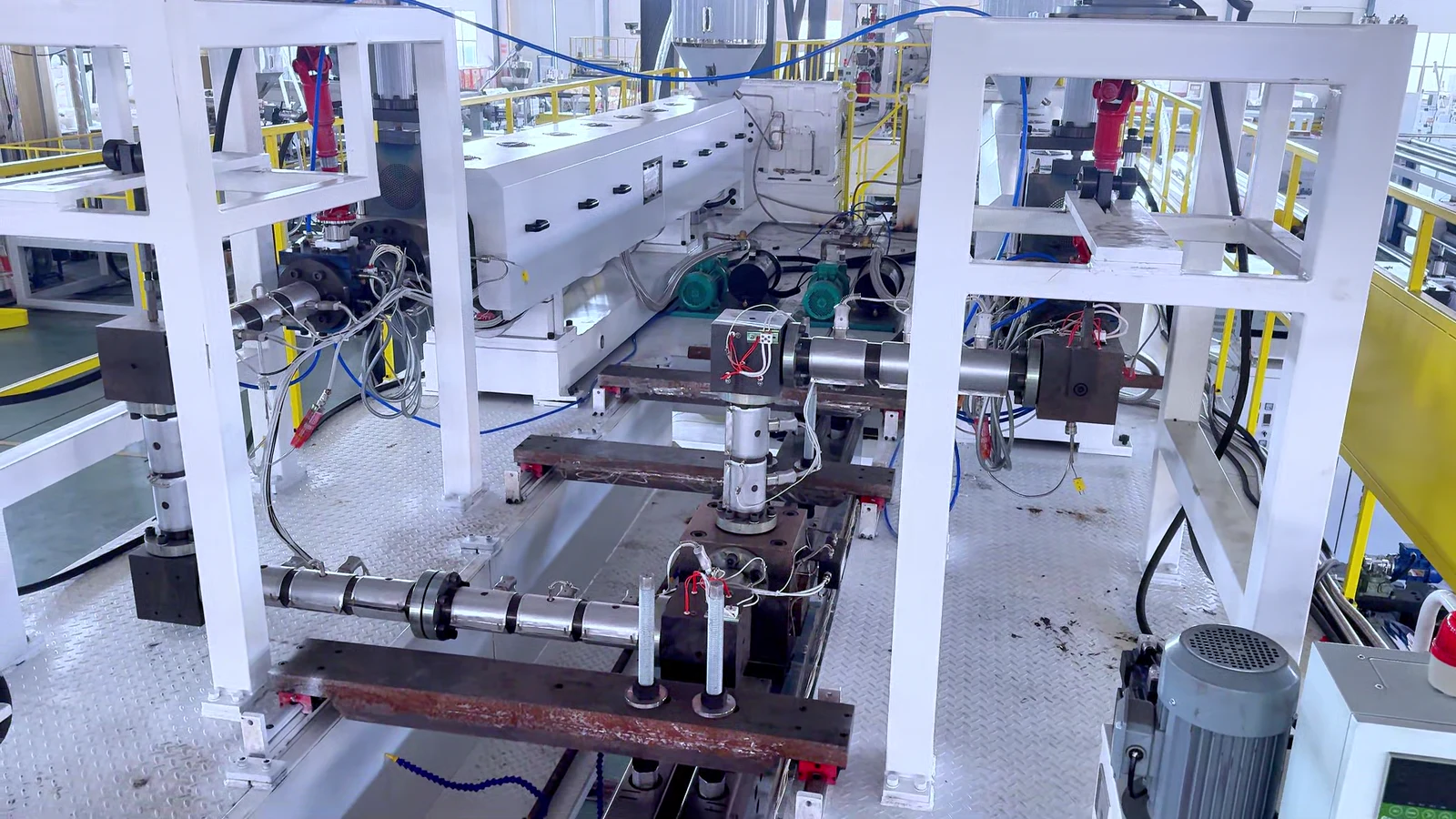
Process context
Compare the forming route as part of a connected system.
Forming, cooling, roll handling, factory interfaces and evidence should stay beside the reference product.
Illustrative process comparison
Different forming paths, one product-first review.
Use this as a review map. The selected product, width basis, surface, roll format, factory interfaces and evidence plan determine the final process discussion.
Flat-die and blown-film production-route comparison — different does not mean better
| Comparison point | Flat-die route: review | Blown-film route: review | Evidence before selection |
|---|---|---|---|
| Forming geometry | Flat die and transition into sheet and cooling path | Annular die and bubble formation | Product condition and process-flow drawing |
| Cooling and stabilisation | Cooling or contact-roll route, heat removal and sheet support | Air cooling, bubble stability and collapse path | Selected cooling concept and interface schedule |
| Width basis | Keep die, gross, trimmed and net widths separate | Keep tube, opened, gross, trimmed and net widths separate | Width definition, trim treatment and measurement basis |
| Building envelope | Arrangement, service access and roll-transfer space | Bubble-path elevation, collapse area, access and roll transfer | Layout drawing and safe-access review |
| Surface and layers | Required faces, surface route and layers are selected questions | Required faces, surface route and layers are selected questions | Product matrix and acceptance basis |
| Finishing and winding | Sheet tension, inspection, edge handling and roll format | Collapsed or opened web path, tension, inspection and roll format | Roll specification, handling plan and records |
Scroll horizontally to view all columns on small screens.
Project preparation checklist
Questions to discuss
Neither route is universally better. Compare the required product, surface or layer route, net width, roll format, factory envelope, evidence plan and selected configuration on the same basis.
Choose the next path
Move from this decision to the next project action.
Align the product brief, scope boundary and evidence before comparing offers.
NextNew factoryTranslate the selected route into layout, utilities, handling and start-up readiness.
NextProduction upgradeIdentify the actual bottleneck before selecting an added system or line scope.